Zapier Programmatic SEO in 2026: What Still Works, and What Broke
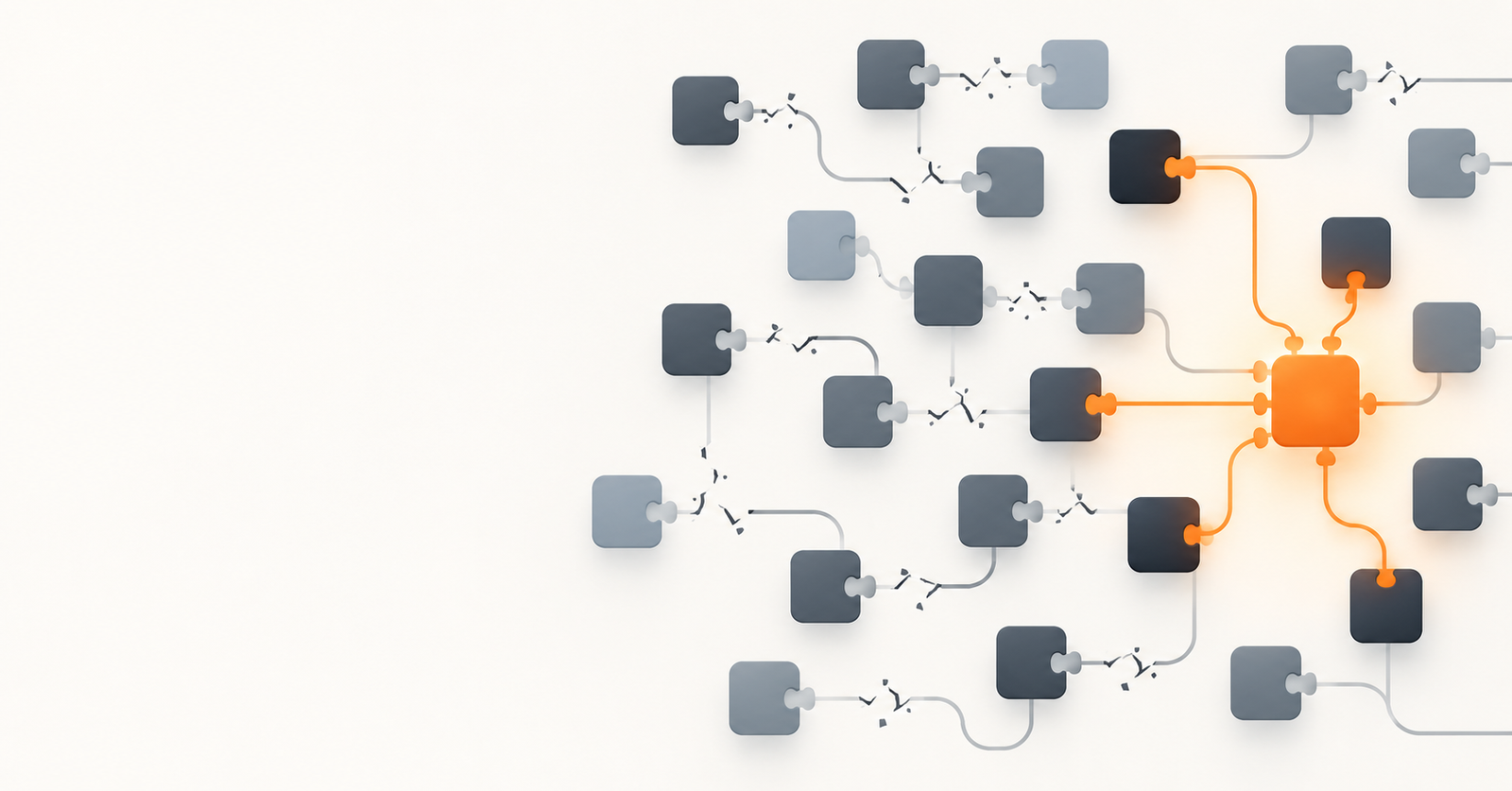
Zapier is the first name on almost every list of programmatic SEO examples. Build a page for every app, then a page for every pair of apps, and watch the long-tail traffic roll in.
So I tested it. On October 9, 2026, I pulled US search results for six integration searches, the kind those case studies love to quote. I expected at least a few first-place finishes. Zapier’s integration pages ranked first for none of them, and for one search Zapier wasn’t in the top 20 at all.
That doesn’t mean Zapier programmatic SEO failed. It means the version people keep copying is a few years old. Below is what the system looks like now, what’s broken, and what a SaaS team should take from it.
Quick answer: Zapier programmatic SEO is a database-driven page system. Zapier generates a page for each app it supports, a page for each pair of apps, and a page for each pre-built workflow (a “Zap template”). Every page is filled with data only Zapier has: the triggers and actions each app supports. In 2026 those pages still rank, but app makers’ own pages and Google’s AI Overviews now sit above them on many integration searches.
How Zapier’s programmatic SEO system is built
Three page types do the work.
- App pages, like /apps/slack/integrations. One per app. Zapier’s site says it connects 9,000+ apps.
- App-pair pages, like /apps/gmail/integrations/slack. These target “[app] [app] integration” searches.
- Template pages, like /apps/gmail/integrations/slack/48/send-new-gmail-emails-as-slack-channel-messages. Each one is a single pre-built workflow with its own URL.
The pages work because of the data. Every pair page lists the real triggers and actions both apps support through Zapier, and nobody else can publish that list. Zapier’s own blog post on programmatic SEO (last updated February 2025) says as much: the triggers and actions are the unique data behind the pages.
The crawl control is tidy too. Zapier’s robots.txt blocks any URL with a query string (Disallow: /*?) and blocks landing-page variants under /apps/. It lists 11 sitemaps, split across templates, the blog, automations and other sections. Most SaaS sites won’t need crawl control at this scale, but the idea carries over: keep bots off URL variations you don’t want indexed. That’s a core part of technical SEO on any large site.
How I checked
- Search results: Ubersuggest, United States, results snapshots dated September 12 to October 9, 2026.
- Search volumes: Ubersuggest monthly estimates for the US. They swing a lot at this size, so read them as rough.
- Traffic estimates: Ubersuggest’s domain overview and top pages report for zapier.com.
- Live pages: I fetched the Gmail + Slack pair page, one of its template pages, robots.txt and llms.txt on October 9, 2026.
Third-party traffic numbers are estimates, and six searches are a sample, not a census. Read the direction, not the decimals.
Finding 1: The integration pages no longer own their own searches
Zapier’s February 2025 post says Zapier would likely rank at or near the top for a search like “google sheets integrations.” The pair pages are the heart of Zapier programmatic SEO, so that’s where I started. Here’s what the results looked like this month.
| Search (US) | Est. monthly searches | Zapier’s best organic rank | What ranks above Zapier |
|---|---|---|---|
| slack trello integration | 480 | Not in the top 20 | Reddit, YouTube and Appzi hold the top three organic spots |
| gmail slack integration | 260 | 4th (pair page) | Google Workspace Marketplace, two Slack pages |
| google sheets slack integration | 110 | 2nd (pair page) | A Slack help article |
| google sheets integrations | 90 | 3rd (app page) | Make, Google Cloud docs |
| typeform hubspot integration | 70 | 6th (pair page) | Typeform, HubSpot, HubSpot Community, a guide from Default |
| google sheets notion integration | 40 | 6th (a blog post; no pair page in the top 20) | Two Notion pages, Reddit, Google Workspace Marketplace, n8n |
All six results pages also showed an AI Overview.
App makers caught up. Slack, Notion, Typeform and HubSpot now run their own integration and marketplace pages, and Google often ranks the app maker’s own page above Zapier’s for “connect my app” searches. Competitors copied the URL pattern too. Make and n8n use the same app-to-app integration structure, and Make outranks Zapier on “google sheets integrations.”
One result bothered me more than the rest. Zapier’s own blog post uses a Google Sheets and Notion search as its example of pair pages ranking near the top. For nearly the same search today, no Zapier pair page shows up in the top 20. I also ran the exact phrase from that post, “google sheets and notion integration.” Zapier’s best result there is a community forum thread, the second organic result.
Finding 2: Zapier’s search traffic now leans on the blog
If the pair pages slipped, where does the traffic come from now? Ubersuggest’s list of Zapier’s top 40 US pages by estimated organic traffic contains zero integration pages. It’s the homepage plus blog posts like “best wireframe tools,” “best AI chatbots” and “best note-taking apps.”
The same tool estimates Zapier’s monthly search traffic fell from about 22.2 million in October 2024 to about 3.7 million in September 2026. Its count of ranking keywords dropped from about 1.5 million to about 310,000.
I’d handle those numbers with care. The monthly series is jumpy (about 7.9 million in March 2026, about 2.9 million in July), and part of a sixfold drop could be how Ubersuggest counts. But the direction matches the results pages: the pair pages in Zapier programmatic SEO rank lower than the case studies claim, and the listicles carry the load.
Older ranking counts from 2021 still show up in many Zapier SEO strategy write-ups. I couldn’t verify them. And even if they were right then, they describe a different search engine. If you’re staring at a traffic chart that fell off a cliff, the cause is rarely one thing, and I walk through how to find out why traffic dropped in a separate post.
Finding 3: At this scale, content debt piles up fast
This is the cost side of Zapier programmatic SEO that the case studies skip. Zapier’s own post warns that more pages mean more upkeep, and its pages show why. On one pair page and one template page, I found:
- The Gmail-to-Slack template page’s meta description is cut off mid-sentence. It ends with “Learn more in our”.
- The same page’s related-templates list shows three separate templates titled “Get an AI-generated daily digest of your emails in Slack,” each on its own URL, plus two identically titled Cohere summary templates.
- One related template still prints Gmail messages through Google Cloud Print, a service Google had announced it would shut down on December 31, 2020.
- The step 2 summary for the “Send Channel Message” action reads “Triggers when a new message is posted…” That describes a trigger, not an action.
- The pair page, fetched in October 2026, still quotes a 2023 Forbes Cloud 100 stat and shows four G2 badges from Winter 2024.
None of this will sink a domain with Zapier’s authority. On a site with a domain authority of 20, the same mess across 2,000 pages is how you end up staring at “Crawled, currently not indexed” in Search Console. If your site already has pages but no traffic, start there.
Finding 4: Zapier is rebuilding the same catalog for AI agents
Older case studies miss this, and I think it’s the smartest thing Zapier programmatic SEO is doing right now.
The Gmail + Slack pair page has a section called “For AI agents & developers.” It explains how to call the same Gmail and Slack actions through Zapier’s MCP server or its TypeScript SDK.
The robots.txt file explicitly allows GPTBot, OAI-SearchBot, ChatGPT-User, ClaudeBot, Claude-SearchBot, Claude-User, PerplexityBot, Google-Extended and DuckAssistBot, and a Content-Signal line permits AI training, search and AI input. Then there’s zapier.com/llms.txt, which points to markdown copies of the templates and automations pages, an AI catalog file, an MCP server card and an AGENTS.md file.
None of this is for Google. Google’s documentation on AI features says you don’t need special files, AI text files or extra markup to appear in AI Overviews or AI Mode. Zapier is building for agents that act, and for an agent the question is which tool gets called, not which page ranks. The integration catalog that once fed Google now also feeds AI agents through MCP.
If you’re planning programmatic pages in 2026, put your effort into the data. Pages come and go. If you want help building for both Google and AI agents, that’s what my AI SEO work covers.
What still works in Zapier programmatic SEO
To be fair, a lot still holds up. The data on each page is real and specific, and nobody can copy triggers and actions from somewhere else. Crawl control keeps bots on the pages that count. Internal linking is dense: the template page I checked links to about 59 related templates and back to both app pages, and it carries an A to Z app index.
And Zapier still has a page on page one for five of the six searches I checked, four of them integration pages. It just isn’t first.
What SaaS teams should copy from Zapier programmatic SEO, and what to skip
These are the takeaways I’d give a SaaS founder who points at Zapier programmatic SEO and says “let’s do that.”
- Copy the data, not the template. Only build programmatic pages where you hold data nobody else can publish: your integrations, your benchmarks, your usage data. A template stuffed with generic copy is what Google’s spam policies call scaled content abuse.
- Get listed where you’re outranked. For “app A + app B” searches, the app makers’ own marketplaces now win. If your product has integrations, a listing in the Slack Marketplace or HubSpot’s App Marketplace may do more than your own pair page.
- Budget for maintenance from day one. Every 1,000 programmatic pages needs a regular check for dead products, duplicates and broken metadata. Zapier’s stale pages suggest it doesn’t, and it gets away with it. You won’t.
- Measure by page type. Track app pages, pair pages and blog posts as separate groups in Search Console. A blended traffic number would have hidden every finding above.
- Make the data easy for machines to read. Use server-rendered HTML, robots.txt rules that let AI search bots in, and structured data that matches what’s on the page (my free Schema Markup Generator and Schema Validator help with that). Skip the files Google says it doesn’t need.
Planning programmatic pages for a SaaS product and want a second opinion before you build thousands of them? Tell me what you’re working with through the contact page, and I’ll tell you what I’d test first.
Run the same check on your own site
You don’t need Zapier’s budget to run this audit. My free Technical SEO Auditor crawls your site and flags the technical issues behind most indexing problems. The GEO Checker shows which AI crawlers your robots.txt blocks and whether your content needs JavaScript to load.
And if you’re a SaaS team weighing programmatic pages and want a second opinion before you build 5,000 of them, that’s the work I do in SaaS SEO.
FAQ
What is Zapier programmatic SEO?
It’s Zapier’s system of generating search pages from its own app database: one page per app, one per app pair, and one per workflow template. Each page lists the triggers and actions available through Zapier, which is data competitors can’t copy.
Does Zapier programmatic SEO still work in 2026?
Partly. The pages still reach page one for many integration searches, but in my October 2026 check they ranked first for none of the six searches I tested. App makers’ own pages, Make, Reddit and AI Overviews now take the top spots.
Is Zapier still one of the best programmatic SEO examples?
Yes, but study the 2026 version. Zapier programmatic SEO now shows both sides: why unique data works, and what happens when app makers, competitors and AI Overviews crowd the same searches.
How many integration pages does Zapier have?
Zapier doesn’t publish a page count. Its site says it connects 9,000+ apps, and its own programmatic SEO post says only “thousands upon thousands” of pages. Treat any exact figure in a case study as an estimate.
Is programmatic SEO risky for a small SaaS site?
Yes, if the pages don’t carry unique data. Google’s spam policies treat mass-produced pages with little value as scaled content abuse. Start with a few dozen pages, check they get indexed and earn clicks, then expand.
Should my SaaS add an llms.txt file like Zapier?
Not for Google. Google says no special files are needed to appear in its AI features. An llms.txt file may help AI agents and developer tools find your docs, which is why Zapier has one. Treat it as optional and cheap, not as a ranking factor.
Sources
- Zapier: Gmail + Slack integration page
- Zapier: Gmail to Slack template page
- Zapier robots.txt
- Zapier llms.txt
- Zapier blog: Programmatic SEO
- Google Search Central: AI features and your website
- Google Search Central: Spam policies
- Android Central: Google Cloud Print shutdown
- Ubersuggest search and traffic data, United States, September to October 2026
Recent Articles

How Much Do SEO Services Cost in India in 2026? Pricing Guide
SEO cost in India runs from ₹8,000 to ₹2,00,000 a month for most businesses. Enterprise retainers go well past that....
Read Full Article →
Why Your Traffic Drops After a Migration, and How to Actually Find Out
Most "traffic dropped after migration" post-mortems stop at redirects. Here's the fuller checklist I actually run, and why the drop...
Read Full Article →